
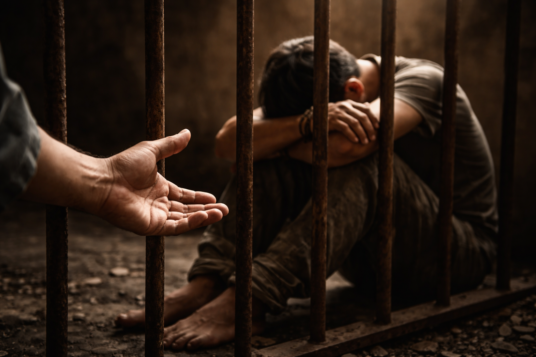
Indifference is never neutral. When suffering unfolds before our eyes and we remain silent, we are making a moral choice. To ignore injustice is to allow it to continue unchallenged. For those of faith, this is not merely unfortunate; it is a failure of conscience.
The Bible warns consistently against such neglect. In Isaiah 42:1‑9, God speaks of a servant entrusted with bringing justice to the nations, opening blind eyes, and freeing captives. The passage reminds us that God’s concern extends beyond any single community, tribe, or nation. Every human life carries God’s image and dignity, whether or not a person shares the covenant of faith. The moral obligation to act justly, then, is universal.
Indifference becomes especially troubling when it is selective. We may respond passionately to injustices that feel familiar, convenient, or culturally comfortable, such as when they conveniently align with one’s political tribe. This is a failure of moral consistency. Christians cannot, as other social activists may, justify why one oppressed group is worthy of compassion while another is ignored. Every person created in God’s image deserves the same fundamental freedoms and protection from oppression, unless they have embraced such evil that they bring destruction upon themselves. Note that.
In the world today, examples of human suffering call us to recognize the weight of this responsibility. In Venezuela, for instance, the people have endured years of poverty and political oppression under an illegitimate regime. Recent developments show some prisoners released and hope beginning to return to a population long weighed down by fear and deprivation (Reuters, 2026). Despite still being early, the progress shows how removing dictators and releasing political prisoners can be liberating. Across the world in Iran, protests against an oppressive regime have met brutal repression. Reports of arrests, abuse, and even mass murders remind us how devastating injustice is (The Guardian, 2026).
The ethical question is: what should Christians do when confronted with such suffering? Acting justly toward oppressed peoples cannot be an optional humanitarian preference. It must be a part of our mission.
The first step is awareness. We must see that injustice exists and refuse to rationalize or ignore it. The next is compassionate action, guided by faith and moral conviction. This may take the form of prayer, advocacy, education, charity, or other support. The goal is to restore hope and liberty, to be a light in dark places, and to stand alongside those whose voices have been silenced, such as when regimes close off access to all communications.
God calls His people not only to live righteously but to pursue a righteous purpose. That purpose extends beyond personal holiness and into the world: to illuminate, to free, and to defend. Indifference may be easy; engagement is costly. Yet Scripture and conscience alike remind us that to ignore oppression is to turn from the work God has entrusted to us. The oppressed are not just distant strangers—they are our neighbors, our brothers and sisters, and above all, children of God. Our attention, our advocacy, and our courage in the face of injustice are the first steps in fulfilling our calling.